
Understanding Liability After a Memphis Collision
Key Takeaways: In Tennessee, fault after a Memphis car accident is determined by gathering evidence and applying the state’s modified comparative negligence rule, which assigns each party a percentage of responsibility. The process begins with a responding officer’s crash report, followed by insurance adjuster reviews, and if disputed, a binding allocation made by a judge or jury. Under the modified comparative fault rule established in McIntyre v. Balentine, an injured plaintiff can recover only if their fault is less than the defendant’s, with damages reduced by their assigned share and barred entirely once their fault reaches 50 percent or more. Because adjusters have incentive to minimize payouts, their early fault assessments deserve scrutiny and are not final. Strong evidence such as police reports, photos, footage, and witness statements often determines whether a fault allocation is fair. Acting promptly to document the scene and protect your claim can make a meaningful difference in your compensation.
When a crash happens on I-240 or a side street near downtown, the question of who pays often comes down to one issue: fault. In Tennessee, fault is decided through a structured process involving police investigations, insurance adjusters, and ultimately, if a case proceeds to trial, a judge or jury. Tennessee follows a modified comparative negligence rule, meaning your percentage of responsibility directly affects what you can recover. Understanding how this system works is the first step toward protecting your claim.
If you were hurt in a wreck and are unsure where you stand, the team at Pickford Law is ready to help you understand your options. You can call us at 901-424-1920 or reach out through our online case review request to discuss what happened.
💡 Pro Tip: Document everything at the scene if physically able. Photos of vehicle positions, skid marks, traffic signals, and visible injuries become powerful evidence when fault is contested later.
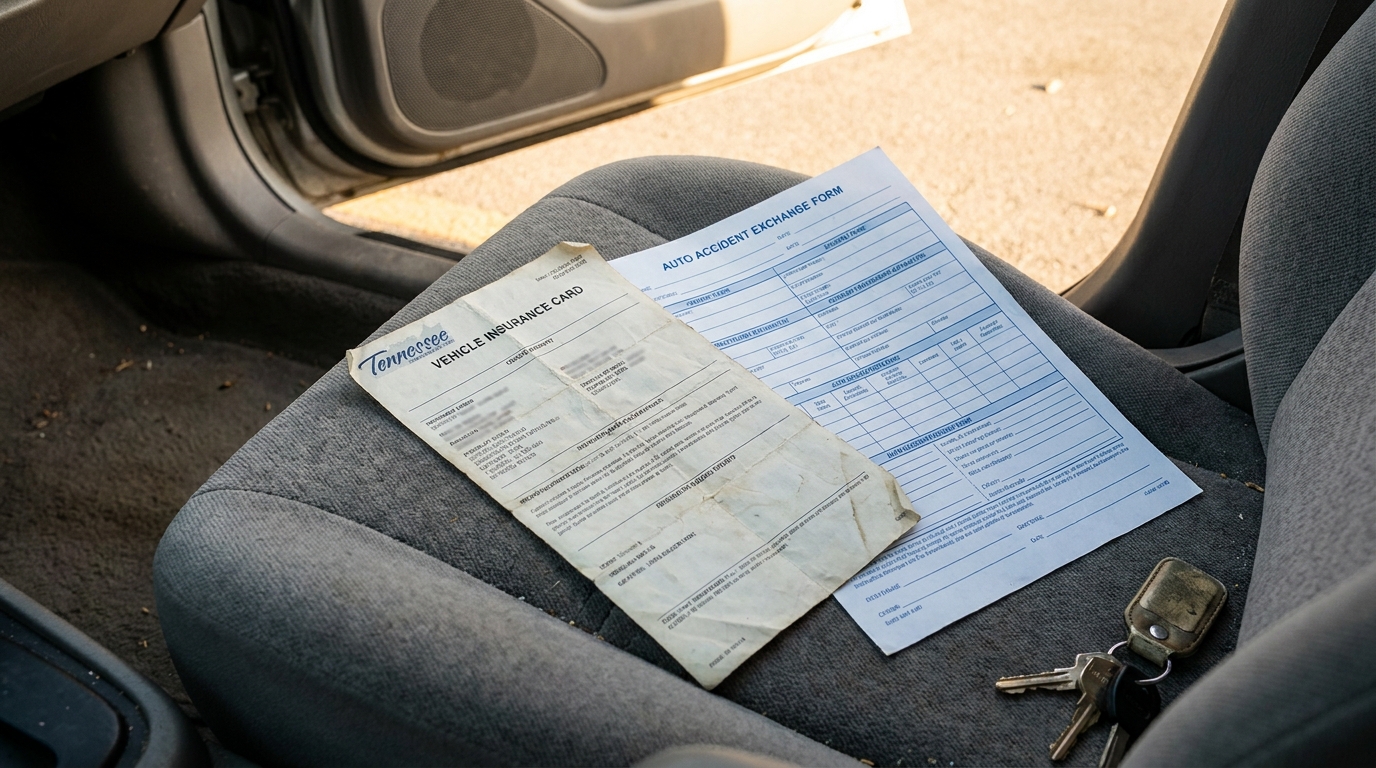
How Is Fault Determined in a Car Accident in Memphis, Tennessee?
Fault in a Memphis crash is determined by gathering evidence and applying Tennessee negligence law to assign each party a percentage of responsibility. The process usually begins with the responding officer, who documents the scene and may note apparent violations. Insurance companies then conduct their own reviews, and if parties cannot agree, the matter may proceed to litigation where fault becomes a question for the jury.
Comparative negligence is the doctrine Tennessee courts use to divide responsibility among everyone involved. As explained in legal reference sources discussing comparative negligence principles, when an injured victim is partially at fault, the court may assign a percentage of fault to both victim and defendant. This approach allocates responsibility based on each party’s degree of negligence and reduces a plaintiff’s recovery in proportion to their assigned share.
Tennessee’s Modified Comparative Negligence Rule
Tennessee uses a modified comparative negligence model with a fault threshold, rather than the harsher contributory negligence rule still used in a handful of states. This standard was established by the Tennessee Supreme Court in McIntyre v. Balentine, 833 S.W.2d 52 (Tenn. 1992), giving it binding legal authority across the state. Under this framework, a plaintiff may recover only if their own negligence is less than the defendant’s (or, where multiple parties are at fault, less than 50 percent of total fault), and recovery is reduced in proportion to the percentage of fault attributable to the plaintiff.
Tennessee follows the variant of the modified rule under which a plaintiff can recover damages only if their own negligence is less than 50 percent of total fault. Once an injured person is found 50 percent or more responsible for a crash, recovery is barred. This makes the precise allocation of fault percentages a central battleground in Memphis auto accident claims.
To put Tennessee’s approach in context, it helps to compare the major negligence systems used across the country.
| Negligence System | Effect on Recovery | Where Used |
|---|---|---|
| Pure comparative negligence | Plaintiff may recover even if 99% at fault | Minority of states |
| Modified comparative negligence | Recovery barred at 50% or 51% fault, depending on the state | Majority of states, including Tennessee |
| Contributory negligence | Any fault by plaintiff bars all recovery | Four states plus D.C. |
The majority of states follow some version of the modified rule, while only four states and the District of Columbia recognize the strict contributory negligence approach. Tennessee does not follow that harsher standard, which barred recovery entirely if a plaintiff contributed any fault at all. Resources such as a national 50-state negligence survey confirm that Tennessee’s modified comparative fault model is more forgiving to injured plaintiffs than contributory negligence jurisdictions.
💡 Pro Tip: Avoid apologizing or admitting partial responsibility at the scene. A casual "I’m sorry" can be misinterpreted as an admission of fault and used to increase your percentage during negotiations.
Who Actually Assigns the Percentages of Fault
Several different parties play a role in determining fault, and their conclusions do not always carry the same legal weight. Knowing who decides what can help you understand why an insurer’s early position is not final.
- Law enforcement officers respond to the scene, prepare crash reports, and may indicate contributing factors or cite a driver, though a citation is not a binding legal finding of fault.
- Insurance adjusters investigate claims and assign fault for settlement purposes, but their determinations reflect the insurer’s interests and can be disputed.
- Judges and juries make the legally binding allocation when a case is litigated, allocating responsibility among all parties claimed to be at fault.
Because adjusters often have incentive to minimize payouts, their fault assessments deserve careful scrutiny. Comparative negligence frequently operates as an affirmative defense, allowing a defendant to reduce exposure by shifting blame onto the injured plaintiff. Recognizing this tactic early can prevent you from accepting an inflated fault percentage that shrinks your compensation.
Evidence That Shapes Fault in a Memphis Crash
Strong, well-preserved evidence often separates a fair fault allocation from an unfair one. Because fault determination in Memphis depends heavily on facts, the quality of your documentation can directly influence your percentage of responsibility. Official crash data maintained by the Tennessee Department of Safety and Homeland Security underscores how frequently collisions occur across the state, and each case turns on its own evidentiary record.
Common categories of evidence courts may consider include police reports, photographs, dashcam or surveillance footage, vehicle damage patterns, medical records, and witness statements. Each piece can either support or undercut a party’s version of events, so preservation matters from the first hours. Skid marks fade, surveillance footage gets overwritten, and memories blur, which is why prompt action is advisable.
💡 Pro Tip: Request a copy of the official crash report as soon as available. Reviewing it early lets you spot and address any factual errors before an insurer relies on them to assign fault.
Why Fault Determination Affects Your Compensation
Because Tennessee reduces recovery by your share of fault, even a modest shift in percentages can meaningfully change your financial outcome. If you are found 20 percent responsible for a crash, your total damages would be reduced by that 20 percent. And if your share reaches 50 percent or more, you may be barred from recovering at all, which is why fault determination is rarely a minor detail.
A careful breakdown of negligence concepts, like the one available in this guide to how fault is determined in a car accident, can help injured people grasp what is at stake. The categories of compensation that may be affected include medical expenses, current and future lost wages, vehicle repair or replacement, and pain and suffering, subject to the facts and applicable law.
Outcomes depend on the specific circumstances of each collision. Still, injured Memphis drivers who understand the comparative fault system are better positioned to push back against an unfair allocation. Working with a knowledgeable Memphis car accident lawyer can help ensure your account of the crash is fully documented and presented.
💡 Pro Tip: Keep a running file of every accident-related expense and missed workday. Organized records make it harder for an insurer to dispute the value of your auto accident Memphis Tennessee claim.
Frequently Asked Questions
Is Tennessee an at-fault state for car accidents?
Yes, Tennessee operates as an at-fault state, meaning the driver responsible for the crash is generally liable for resulting damages. The injured party may pursue compensation from the at-fault driver’s insurance or through a civil claim, with recovery adjusted according to comparative fault principles.
What happens if I am partly to blame for the crash?
Under Tennessee’s modified comparative negligence rule, you may still recover if your fault is less than the defendant’s. Your damages would be reduced by your percentage of fault, and recovery is barred once you reach 50 percent or more responsibility.
Does a police report decide who is at fault?
A police report can be influential, but it does not legally establish fault on its own. Insurers consider it, and a judge or jury may weigh it as evidence, yet the binding allocation of fault occurs through the claims and litigation process.
Can fault be divided among more than two drivers?
Yes, when multiple parties are alleged to be at fault, a jury may allocate responsibility among all of them. Each party receives a percentage, and recovery depends on those allocations along with the applicable liability rules.
How soon should I act after a Memphis crash?
Acting promptly is advisable because evidence can disappear quickly and legal deadlines apply. Preserving documentation early and seeking guidance helps protect both your claim and your ability to dispute an unfair fault finding.
Protecting Your Claim After a Memphis Collision
Determining who is at fault after a Memphis crash is a layered process governed by Tennessee’s modified comparative negligence rule and shaped by the evidence each party brings forward. Police reports, insurance reviews, and ultimately a jury all play a part, and because your recovery shrinks with every percentage point of fault assigned to you, the stakes are high. Understanding the modified comparative fault rule that bars recovery at 50 percent or more and the importance of strong evidence puts injured drivers in a better position to seek fair compensation.
If you or a loved one was hurt in a collision and want to understand your rights, the team at Pickford Law is here to listen and explain your options. Call us today at 901-424-1920 or send us a message through our confidential contact form to get started on protecting your claim.