
When a Memphis Insurer Stonewalls Your Crash Claim
Key Takeaways: Memphis crash victims facing an at-fault insurer that won’t pay have real options under Tennessee law. Success depends on distinguishing a good-faith dispute from bad-faith conduct, judged by whether the insurer acted unreasonably. Tennessee’s bad-faith penalty statute (Tenn. Code Ann. § 56-7-105) allows recovery of up to 25% of the loss when an insurer refuses payment without good faith, but only after a written demand and 60-day waiting period. Noneconomic damages are subject to a single $750,000 cap that family members share, though statutory exceptions can lift it. Practical steps include preserving evidence, requesting written explanations, confirming policy limits, and consulting a Memphis car accident lawyer before signing anything.
If the at-fault insurer won’t pay after your Memphis collision, you have meaningful options under Tennessee law. You can document the delay, demand payment in writing, and where the refusal lacks a reasonable basis, pursue statutory penalties and a lawsuit. Tennessee gives injured people tools to push back against carriers that ignore valid claims, though outcomes depend on the specific facts, policy language, and insurer conduct.
📞 If an insurer is dragging its feet on your claim, the team at Pickford Law is ready to help. Call 901-424-1920 for a free case review, or reach out through our contact page to discuss your options today.
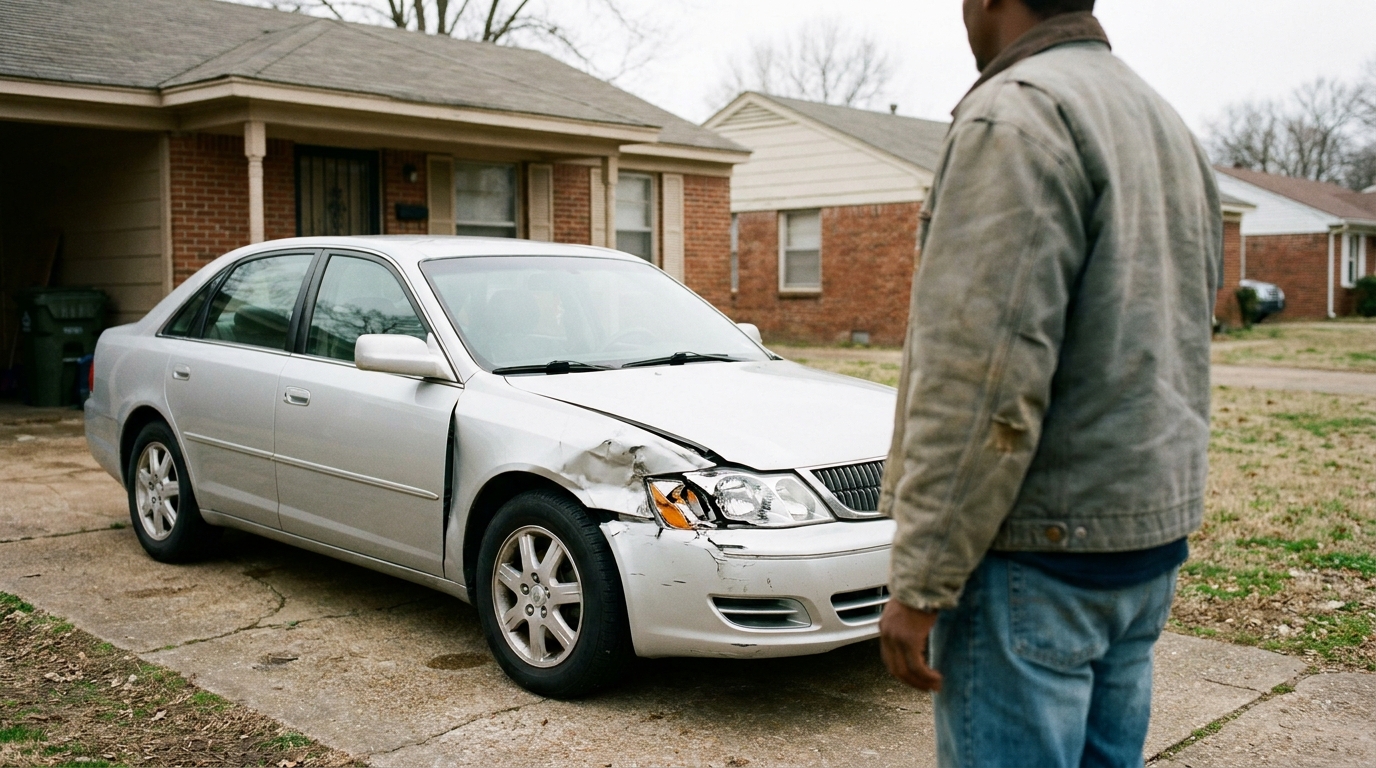
Why the At-Fault Driver’s Insurance Won’t Pay in Memphis Tennessee
Insurers refuse or delay payment for many reasons, and not all are improper. A carrier may genuinely dispute fault, question injury extent, or argue medical treatment was unrelated to the crash. These are legitimate disagreements, and a dispute alone doesn’t mean the insurer broke the law. The challenge is distinguishing between good-faith disagreement and bad-faith conduct.
That distinction matters because the legal standard turns on reasonableness. In Tennessee, an insurer’s refusal exposes it to statutory penalty only when the refusal was not in good faith. A carrier that investigates, communicates, and pays what it reasonably owes is acting within its rights. A carrier that ignores clear liability or invents reasons not to pay may face additional liability. If you believe the at fault driver’s insurance won’t pay Memphis Tennessee residents what they’re owed, identify which category your situation falls into.
💡 Pro Tip: Keep a dated log of every call, email, and letter with the adjuster. A timeline showing repeated, unexplained delays is strong evidence of unreasonable refusal.
Understanding Insurance Bad Faith After a Crash
Every insurance policy in Tennessee contains an implied promise to deal fairly, and violating that promise creates real consequences. Courts recognize an implied covenant of good faith and fair dealing, and when an insurer wrongfully refuses to pay a covered loss, it may be liable for statutory penalty in addition to the claim value. Tennessee does not recognize a separate common-law tort of bad faith; the penalty statute is the primary remedy. Learn more about insurance bad faith claims.
First-Party Versus Third-Party Bad Faith
Bad-faith claims fall into two categories Memphis victims should understand. First-party bad faith involves your own insurer, including uninsured and underinsured motorist coverage. Third-party bad faith involves the at-fault party’s insurance company, such as when it refuses a reasonable settlement offer within policy limits. In Tennessee, that excess-exposure claim generally belongs to the insured driver rather than the injured claimant, so knowing which type applies helps frame your strategy.
Common Tactics Crash Victims Should Watch For
Certain insurer behaviors are recognized warning signs of potential bad faith:
- Unreasonable denial or delay, failure to investigate, requesting excessive documentation, lowball settlement offers, and misrepresentation of policy terms
Seeing one behavior doesn’t automatically prove a violation. Each situation depends on its facts, and an insurer may have a defensible reason. Still, a pattern of these tactics can support a claim that the carrier refused to pay without good faith.
💡 Pro Tip: Never sign a release or accept a settlement check before understanding the full scope of your injuries. Once you sign, reopening the claim is generally difficult.
Tennessee’s Bad-Faith Penalty Statute
Tennessee law allows policyholders to recover a penalty when an insurer wrongfully refuses to pay a covered loss. Under Tenn. Code Ann. § 56-7-105(a), an insurer that refuses to pay a loss within sixty days after demand shall be liable to pay the holder up to twenty-five percent of the liability for the loss, if the refusal was not in good faith. Review the Tennessee bad-faith penalty statute for precise language.
The statute sets out specific procedural steps before the penalty applies. It requires a written demand followed by a 60-day waiting period before suit. Recovery also requires proof that the refusal was not in good faith and inflicted additional expense, loss, or injury; the penalty is capped at twenty-five percent of the liability for the loss.
A separate provision addresses unauthorized foreign or alien insurers. Under § 56-7-105(b), in actions against an unauthorized insurer that fails to pay within thirty days after demand, where the refusal was vexatious and without reasonable cause, the court may allow a reasonable attorney fee capped at twelve and one-half percent of the recoverable amount, and no less than twenty-five dollars.
| Bad-Faith Concept | Key Point Under Tennessee Law |
|---|---|
| Core standard | Refusal to pay must be without good faith |
| Statutory penalty | Up to 25% of the liability for the loss |
| Demand requirement | Written demand plus a 60-day wait before suit |
| Unauthorized insurer fee | Capped at 12.5% of the recoverable amount |
A bad-faith claim is secondary to the underlying contract claim. The predicate breach-of-contract cause of action drives case value, while the penalty adds leverage. The best statutory bad-faith award is only up to twenty-five percent.
How Tennessee’s Damages Cap Affects Your Recovery
Tennessee places a ceiling on noneconomic damages that crash victims should factor into their expectations. The Tennessee Supreme Court held that Tenn. Code Ann. § 29-39-102 limits noneconomic damages to $750,000 in the aggregate for all claims in a personal injury action. This is a single aggregate cap rather than per plaintiff. Economic damages like medical bills and lost wages are treated separately. The statute contains exceptions, such as when the defendant acted intentionally, was intoxicated, or destroyed records, under which the cap does not apply.
The Court has also addressed how the cap applies to family members. It held the cap doesn’t apply separately to a spouse’s loss of consortium claim; instead, that derivative claim shares the same aggregate cap. Memphis families pursuing related claims from one crash should understand multiple claimants may share a single ceiling. The cap is firmly established law, subject only to statutory exceptions.
💡 Pro Tip: Document your economic losses meticulously, including future medical needs and lost earning capacity. Because the cap applies to noneconomic damages, thorough proof of economic harm often has an outsized effect on total recovery.
Practical Steps When an Insurer Refuses to Pay
Taking organized action early gives you the strongest footing when a carrier stalls. Start by preserving evidence from the crash, photos, police report, medical records, and repair estimates. Send a clear written demand and keep copies of everything.
Consider these common steps for Memphis crash victims:
- Request a written explanation for any denial or delay
- Confirm policy limits and coverage details in writing
- Track every deadline, including the 60-day demand period
- Speak with a Memphis car accident lawyer before signing anything
Local guidance can make a significant difference. If you’re facing a stalled claim, our resource on what to do when your car was hit and insurance won’t pay walks through practical next steps. Our Memphis car accident lawyer page explains how representation works.
💡 Pro Tip: Tennessee generally applies a one-year statute of limitations to personal injury claims. Don’t assume a deadline extension applies; confirm timing early so you don’t lose the right to sue.
Frequently Asked Questions
1. What counts as bad faith by an insurer in Tennessee?
Bad faith generally arises when an insurer refuses to pay a valid, covered claim without good faith. This can include false statements, improperly handling claims, or refusing payment without a reasonable basis. The refusal must lack good faith, separating genuine bad faith from legitimate disputes over claim value.
2. How much can I recover under the bad-faith penalty statute?
Under Tenn. Code Ann. § 56-7-105(a), the penalty is up to twenty-five percent of the liability for the loss. Recovery requires proof that the refusal was not in good faith and caused additional expense, loss, or injury. The penalty supplements your underlying claim.
3. Do I have to wait before filing suit?
The statute contemplates a formal written demand and a 60-day waiting period before the penalty applies. This gives the insurer an opportunity to pay before facing additional liability. Acting promptly to make that demand preserves your options.
4. Does the $750,000 cap apply to each family member separately?
No, the Tennessee Supreme Court held it is a single aggregate cap for all claims in a personal injury action. A spouse’s loss of consortium claim shares that same cap rather than receiving its own. Economic damages are treated separately, and certain statutory exceptions can remove the cap.
5. What is the difference between first-party and third-party bad faith?
First-party bad faith involves your own insurer, including uninsured and underinsured motorist coverage. Third-party bad faith involves the at-fault driver’s insurance company. The category affects how the claim is structured.
Protecting Your Rights After a Memphis Collision
When the at fault driver’s insurance won’t pay Memphis Tennessee crash victims have real, statute-backed options, but success depends on the facts and timely action. Tennessee’s bad-faith penalty, the implied covenant of good faith, and a clear understanding of the damages cap together shape fair recovery. By documenting the insurer’s conduct, meeting demand requirements, and understanding how the law treats both economic and noneconomic losses, you put yourself in a stronger position. Because every claim is fact-specific, guidance tailored to your situation is the safest path forward.
📞 Don’t let an insurer’s refusal define your recovery. Contact Pickford Law today by calling 901-424-1920 or requesting your free consultation online, and let our team help you pursue the compensation you deserve.