
When a "Minor" Memphis Crash Turns Into a Brain Injury Days Later
Key Takeaways: Concussion symptoms often surface hours or days after a Memphis crash because adrenaline masks injury at the scene, and brain injury may occur without head impact or loss of consciousness. Tennessee’s scene duties under Tenn. Code Ann. § 55-10-102(a) apply on highways and public premises, requiring information exchange that helps victims identify at-fault drivers later. Injury claims generally must be filed within one year under Tenn. Code Ann. § 28-3-104(a)(1)(A), with limited exceptions. Courts apply the discovery rule narrowly, so assume the clock starts on the crash date. Prompt evaluation, consistent care, symptom journals, and witness statements counter insurer arguments about treatment gaps. Tennessee’s modified comparative fault doctrine allows recovery if your fault is less than fifty percent.
You walked away from the wreck on Poplar Avenue feeling shaken but fine. Three days later, the headaches start, lights feel too bright, and you cannot remember that morning’s conversation. This pattern is common and does not mean your injury is imaginary or your claim worthless. Delayed concussion symptoms after a car accident are medically recognized, and Tennessee law may still allow compensation, though deadlines and evidence rules make early action important.
If you are dealing with a possible head injury after a car accident in Memphis, Pickford Law offers free case reviews. Call 901-424-1920 or contact us now to discuss your situation.
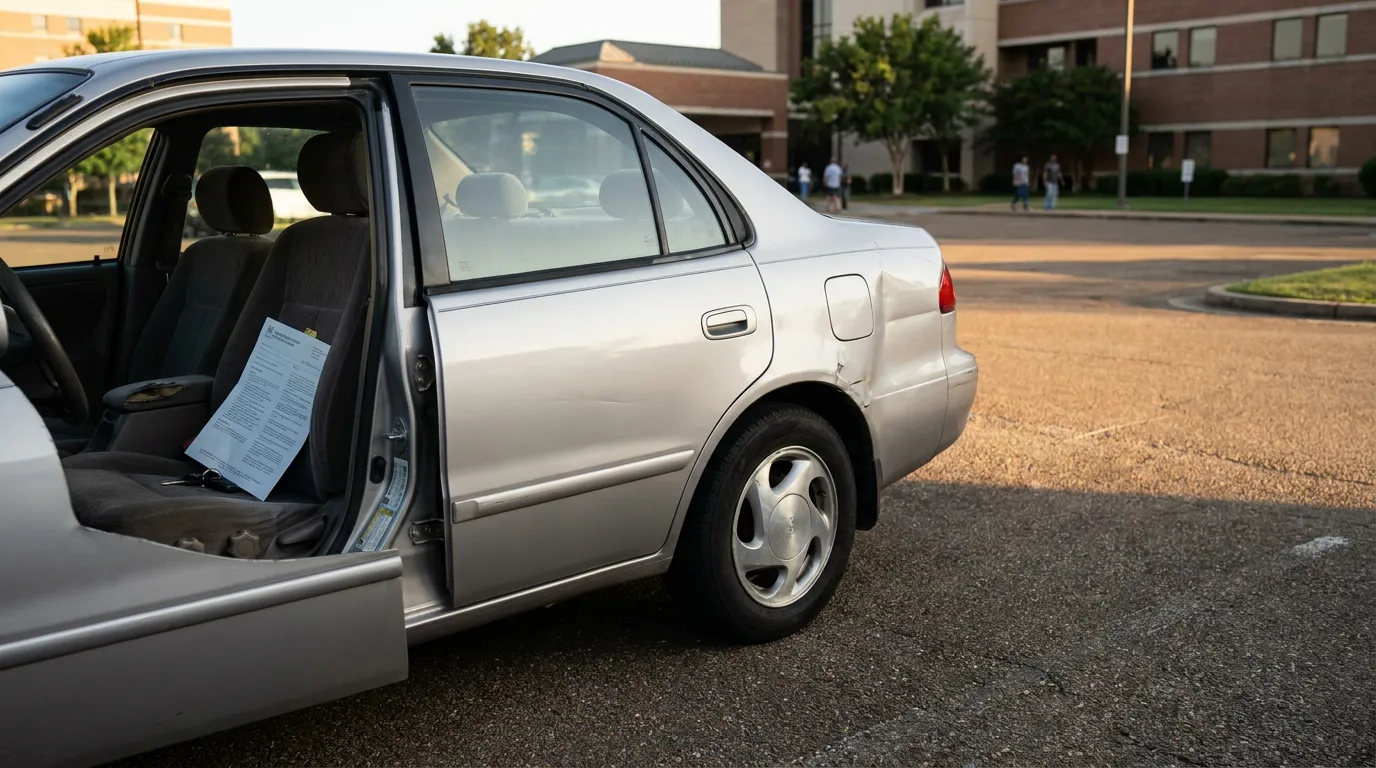
Why Concussion Symptoms Appear Later Than You Expect
The human stress response hides injury in the moments that matter most for documentation. Adrenaline and shock suppress pain signals for hours after impact, which is why many people decline an ambulance and drive home. One Tennessee personal injury attorney noted that it is "very common for people not to go to the hospital immediately after an accident" and that stress and adrenaline can mask pain.
Mild traumatic brain injury does not require loss of consciousness. A concussion can result from rapid acceleration and deceleration of the brain inside the skull, without any head strike. Symptoms that commonly surface hours or days later include:
- Persistent or worsening headache and pressure
- Dizziness, balance problems, or nausea
- Sensitivity to light or noise
- Trouble concentrating, memory gaps, or word-finding difficulty
- Irritability, anxiety, sleep disruption, or unusual fatigue
Tennessee’s crash-scene statute illustrates the problem. Under Tenn. Code Ann. § 55-10-102(a), after all parties have determined and agreed that there is only damage to the vehicles and no suspected injury of any kind to drivers or passengers, all parties shall remain at the scene until the information-exchange requirements of § 55-10-103 are met. That judgment is made by people running on adrenaline, minutes after collision, when delayed head injury is not detectable.
Scene Duties That Protect Your Later Concussion Claim
Tennessee law requires every driver involved in a crash to stop immediately at or near the scene and remain until information-exchange duties are satisfied. Under Tenn. Code Ann. § 55-10-102(a), drivers must stop and stay until requirements of Tenn. Code Ann. § 55-10-103 are met. That statutory exchange of names, addresses, registration, and insurance information allows a concussion victim to identify the responsible party weeks later.
These obligations extend beyond public highways. The Tennessee hit and run statute applies to accidents on highways and premises of shopping centers, apartment complexes, and other premises frequented by the public. Low-speed parking lot collisions still trigger legal duties and are a frequent source of underestimated Memphis auto accident head trauma.
Leaving the scene carries criminal exposure. Tenn. Code Ann. § 55-10-102(b)(1)-(3) grades the damage-only offense by damage amount, generally a Class B misdemeanor where damage does not exceed $1,500 and Class A misdemeanor above that threshold, with minimum one-year license suspension where the driver fails to comply with Tennessee Financial Responsibility Law.
💡 Pro Tip: Ask the responding Memphis Police Department officer how to obtain the crash report number before you leave the scene. Reports frequently contain witness contact information that becomes difficult to recover later.
The Deadline Problem With Delayed Concussion Symptoms After a Car Accident
Tennessee gives injury victims a short window. Under Tenn. Code Ann. § 28-3-104(a)(1)(A), actions for "injuries to the person" generally must be commenced within one (1) year after the cause of action accrued. Concussions and traumatic brain injuries fall within that category.
How the Discovery Rule May, or May Not, Help
The phrase "after the cause of action accrued" carries weight for delayed diagnosis. Tennessee courts apply a discovery rule where the limitations clock may begin when an injured person knew or reasonably should have known of the injury and its wrongful cause. In typical collisions, however, plaintiffs are usually charged with knowledge on the crash date, and courts apply this doctrine narrowly. The safest course is to assume the one-year deadline runs from the collision date.
Limited Circumstances That Extend the Window
A two-year period can apply in narrow situations. Tenn. Code Ann. § 28-3-104(a)(2) allows certain personal injury actions within two (2) years where criminal charges arising from the same conduct are brought within one year against the alleged wrongdoer. In serious Memphis crashes involving DUI or vehicular assault charges, that provision may matter if statute’s specific conditions are met.
Adding Defendants Who Surface Later
Delayed concussion diagnosis often means new at-fault parties emerge after suit is filed. Under Tenn. Code Ann. § 20-1-119(a)-(b), when a defendant’s answer alleges a non-party caused or contributed to injury, plaintiff generally has ninety (90) days from that answer to amend and add that person as defendant, even if ordinary limitations expired. This provision operates only if the original complaint was timely filed.
| Situation | General Rule | Key Statute |
|---|---|---|
| Standard injury claim | One year from accrual | Tenn. Code Ann. § 28-3-104(a)(1)(A) |
| Criminal charges filed against at-fault driver | Up to two years, conditions apply | Tenn. Code Ann. § 28-3-104(a)(2) |
| Defendant blames a non-party | 90 days to add that party | Tenn. Code Ann. § 20-1-119(a)-(b) |
| At-fault driver is a non-resident | Service via Secretary of State | Tenn. Code Ann. § 20-2-203(a) |
Proving a Concussion That Was Not Obvious at the Scene
Documentation is the battleground in delayed-symptom brain injury cases. Insurers routinely argue that a gap between crash and first medical visit shows injury was minor or caused by something else. Seeking evaluation the same night or next day, with a provider recording objective findings, provides contemporaneous evidence harder to dismiss.
Practical steps carry evidentiary weight. Keep a daily symptom journal describing headaches, memory lapses, and missed work. Follow through on referrals to neurology or vestibular therapy. Statements from a spouse, supervisor, or coworker about changes in your functioning may corroborate cognitive symptoms that scans do not show, and there are other overlooked types of evidence that can strengthen these claims.
💡 Pro Tip: Tell every provider that your symptoms began after a motor vehicle collision. Records that omit the mechanism of injury create causation gaps that insurers exploit later.
How Fault Affects What a Memphis Concussion Victim Recovers
Tennessee follows a modified comparative fault system. Under McIntyre v. Balentine, an injured person may recover only if their own fault is less than fifty percent (50%), and any award is reduced proportionally. Tenn. Code Ann. § 29-39-102(b) provides that noneconomic damages are apportioned among defendants according to each one’s percentage of fault. The general principle of comparative negligence is that damages are reduced in proportion to a party’s degree of negligence.
Multi-vehicle crashes raise an additional hurdle. Tenn. Code Ann. § 29-11-107(a) provides that in civil actions governed by comparative fault, each defendant is generally severally liable only for the percentage of damages attributed to it, not jointly liable for the full amount. A concussion victim in a pileup on I-240 must establish each driver’s share of fault to pursue full claim value.
A traffic citation against you does not automatically end your case. Being cited for something unrelated to causation does not necessarily prevent you from pursuing a claim when another driver caused the collision. Fault is determined by the finder of fact, not by who received a ticket. A Memphis car accident brain injury attorney can evaluate how these doctrines apply to your facts.
When the At-Fault Driver Does Not Live in Tennessee
Memphis sits at the junction of three states, so out-of-state drivers are involved in local crashes constantly. Under Tenn. Code Ann. § 20-2-203(a), a non-resident’s use of Tennessee highways constitutes appointment of the Secretary of State as agent for service of process in civil actions arising from accidents in the state. That mechanism preserves your ability to pursue a claim even if the driver returned home to Mississippi or Arkansas before symptoms appeared.
Compensation categories generally remain the same regardless of where the driver lives. The at-fault driver’s liability insurance may address property damage along with injury compensation such as medical expenses, lost income, and pain and suffering, subject to policy limits.
Frequently Asked Questions
1. How long after a Memphis crash can concussion symptoms appear?
Symptoms commonly emerge within hours to several days, and some cognitive or mood changes may surface later. Any new headache, confusion, vision change, or vomiting after a collision warrants prompt medical evaluation.
2. Will a delay in treatment ruin my claim?
Not automatically. Delay is common and does not defeat a claim, though insurers may argue otherwise. Consistent treatment once symptoms appear, plus clear records connecting them to the crash, addresses that argument.
3. Can I still file if I was partly at fault?
Generally yes, provided your share of fault is less than fifty percent under Tennessee’s modified comparative fault doctrine. Your recovery would be reduced by your percentage of fault.
4. Does the one-year deadline ever change?
In limited circumstances. Tenn. Code Ann. § 28-3-104(a)(2) may allow two years where qualifying criminal charges are filed, and Tenn. Code Ann. § 20-1-119 provides a ninety-day window to add newly identified parties. Courts read these provisions narrowly.
5. What if the crash happened in a parking lot?
Statutory scene duties under Tenn. Code Ann. § 55-10-102(a) extend to premises frequented by the public, including shopping centers and apartment complexes. Low-speed lot collisions can produce concussions and support claims.
Taking a Delayed Head Injury Seriously
A concussion diagnosed days after a crash is a real injury with real consequences for work, family, and long-term health. Tennessee’s one-year filing deadline, modified comparative fault rules, and several liability structure make early investigation and thorough medical documentation important.
If concussion symptoms appeared after your collision, the team at Pickford Law is available to review your case at no cost. Reach us at 901-424-1920 or schedule your free consultation today.
Disclaimer: This content is for informational purposes only and is not legal advice. Every case is unique, and results may vary. Consult an attorney about your specific circumstances.